Home › Kitchen & Pantry Organization
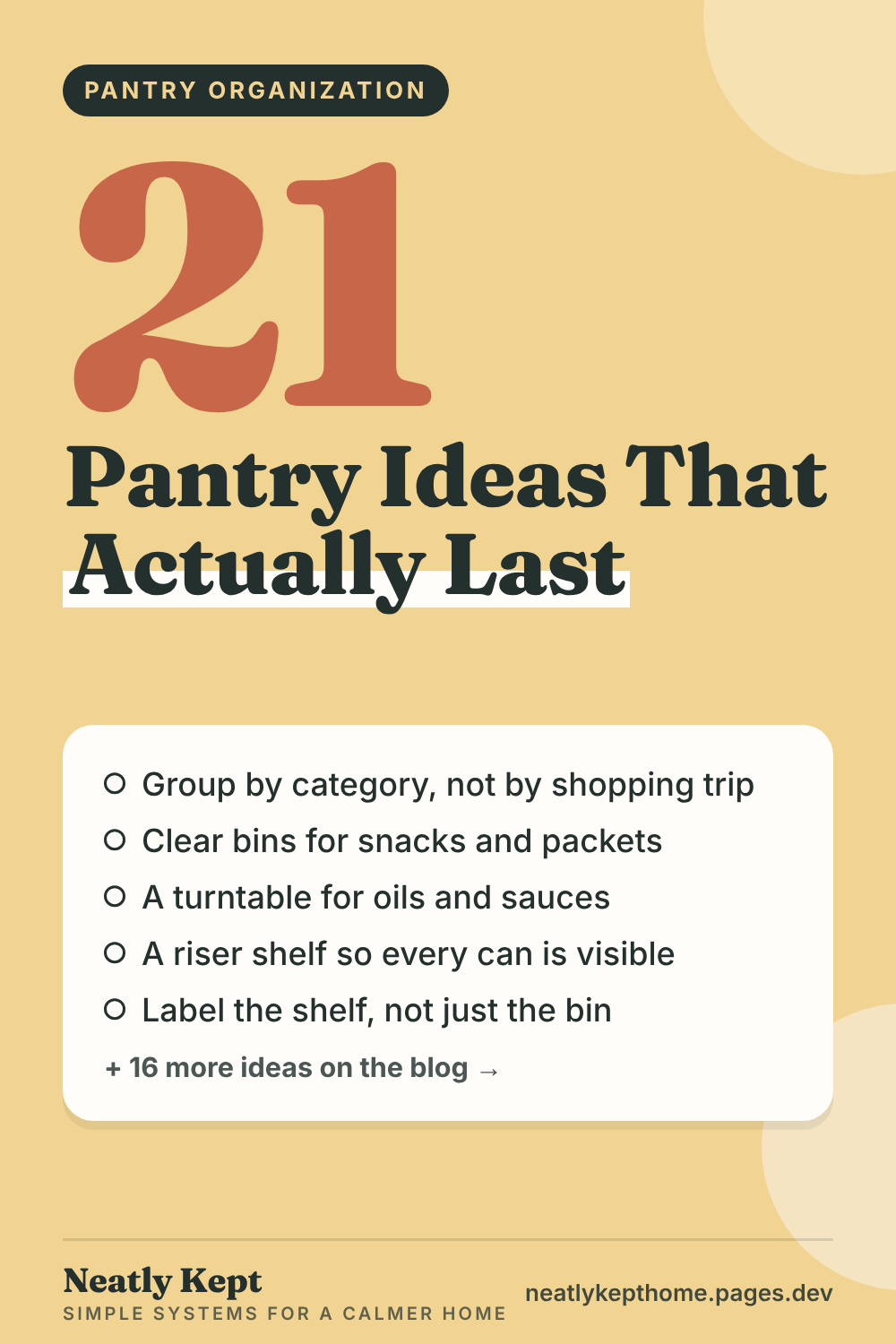
21 Pantry Organization Ideas That Actually Last (Small Pantry Friendly)
A pantry usually falls apart for the same reasons: food has no fixed spot, you can't see what's at the back, and everyone in the house puts things away differently. These 21 ideas fix those problems. Most cost nothing, and the ones that do cost money are inexpensive.
Start here: the 3-step reset
Before you buy anything, do this once:
- Take everything out. Yes, everything. You can't plan a space you can't see.
- Check dates and toss anything expired or stale.
- Group what's left into categories on the counter. Now you know what you actually need storage for.
Systems that make it stick
1. Group by category, not by shopping trip. Baking with baking, breakfast with breakfast. When everything has a category, everyone knows where things go back.
2. Put everyday items at eye level. Snacks, cereal and the things you reach for daily go between shoulder and waist height.
3. Heavy and bulk items go low. Flour sacks, drinks and extra cans belong on the floor or the bottom shelf.
4. Rarely used items go high. Holiday baking supplies and backup stock live on the top shelf.
5. Label the shelf, not just the bin. A label on the shelf edge tells everyone where the bin goes back, not just what's in it.
6. Use a "first in, first out" rule. Put new groceries behind older ones so nothing gets forgotten.
7. Keep a running shopping list on the door. A small notepad or whiteboard inside the pantry door means nobody forgets to write down what ran out.
Containers that are worth it
8. Clear bins for snacks and packets. Loose packets slide around; a bin corrals them and you can see when it's low.
9. A turntable for oils and sauces. Corners are dead space. A turntable lets you spin to reach the bottle at the back.
10. A can riser. A tiered shelf lifts the back row so every label is visible.
11. Airtight containers for opened staples. Pasta, rice, cereal and flour stay fresher, and you can see how much is left. Cut the cooking instructions off the bag and tape them to the back of the container.
12. Baskets for bulky, odd shapes. Potatoes, onions, bread and bags of chips are easier in an open basket.
13. Don't decant everything. Decanting takes time. Do it only for the items you use often and that come in awkward packaging.
Small pantry ideas
14. Use the back of the door. An over-the-door rack holds spices, foil, wraps and small packets.
15. Add a shelf riser. It doubles the usable space on tall shelves.
16. Store vertically. Baking sheets, cutting boards and trays stand upright in a file organizer or between tension rods.
17. Use the floor. A rolling cart or a couple of bins on the floor can hold drinks, bulk items and pet food.
No pantry? Try these
18. Pick one cabinet as "the pantry." Even a single cabinet works if it's dedicated to food.
19. Use a freestanding shelf or cart. A narrow rolling cart fits between the fridge and the wall.
20. Turn a coat closet into a pantry. If the kitchen is next to a closet, add shelves and it becomes a walk-in.
Keep it working
21. Do a 5-minute reset each week. Before you shop, straighten each category, move older items to the front and update the list. That one habit keeps the pantry organized for good.
Budget tip
Start with the systems (ideas 1–7) and only buy containers for the problems that remain. A shoebox or a cut-down cereal box works as a bin while you decide what you actually need.